How to Choose the Right Riad in Morocco: 2025 Guide for a Perfect Stay
What Is a Riad? Understanding Traditional Moroccan Guesthouses
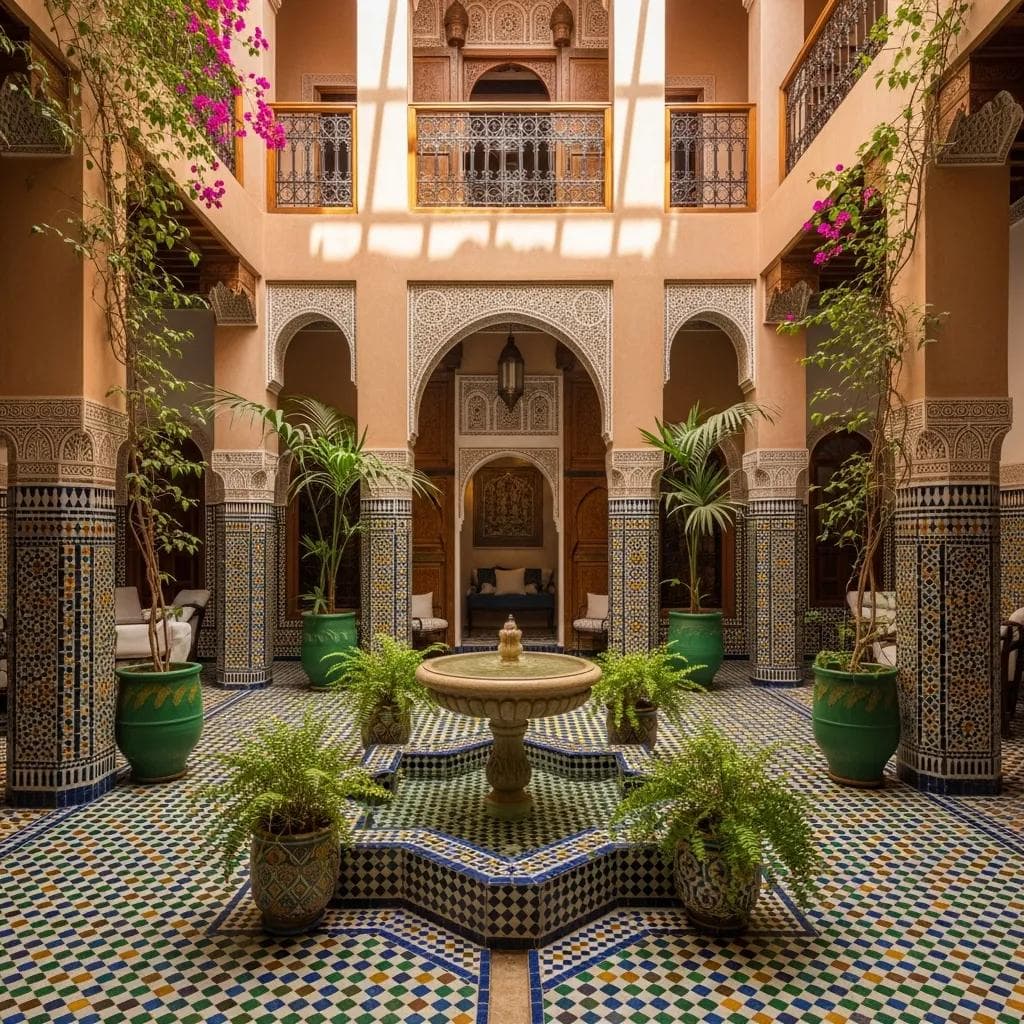
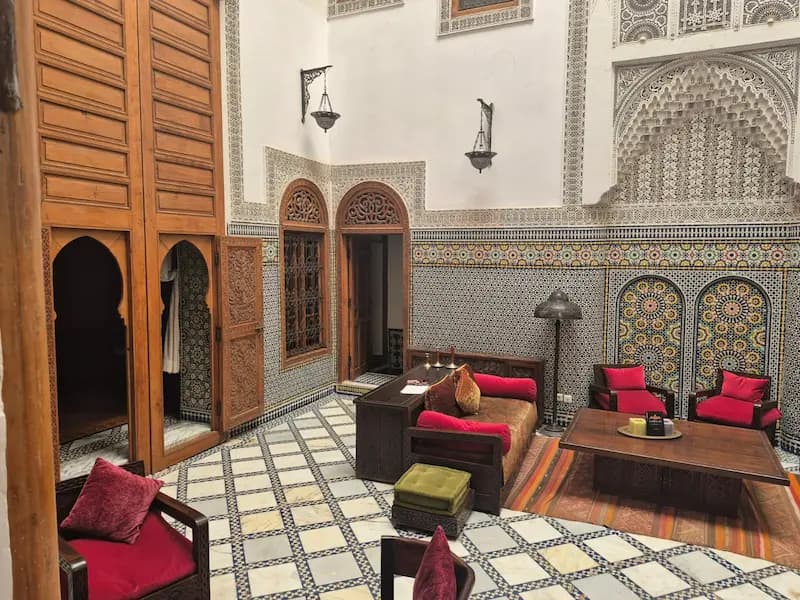
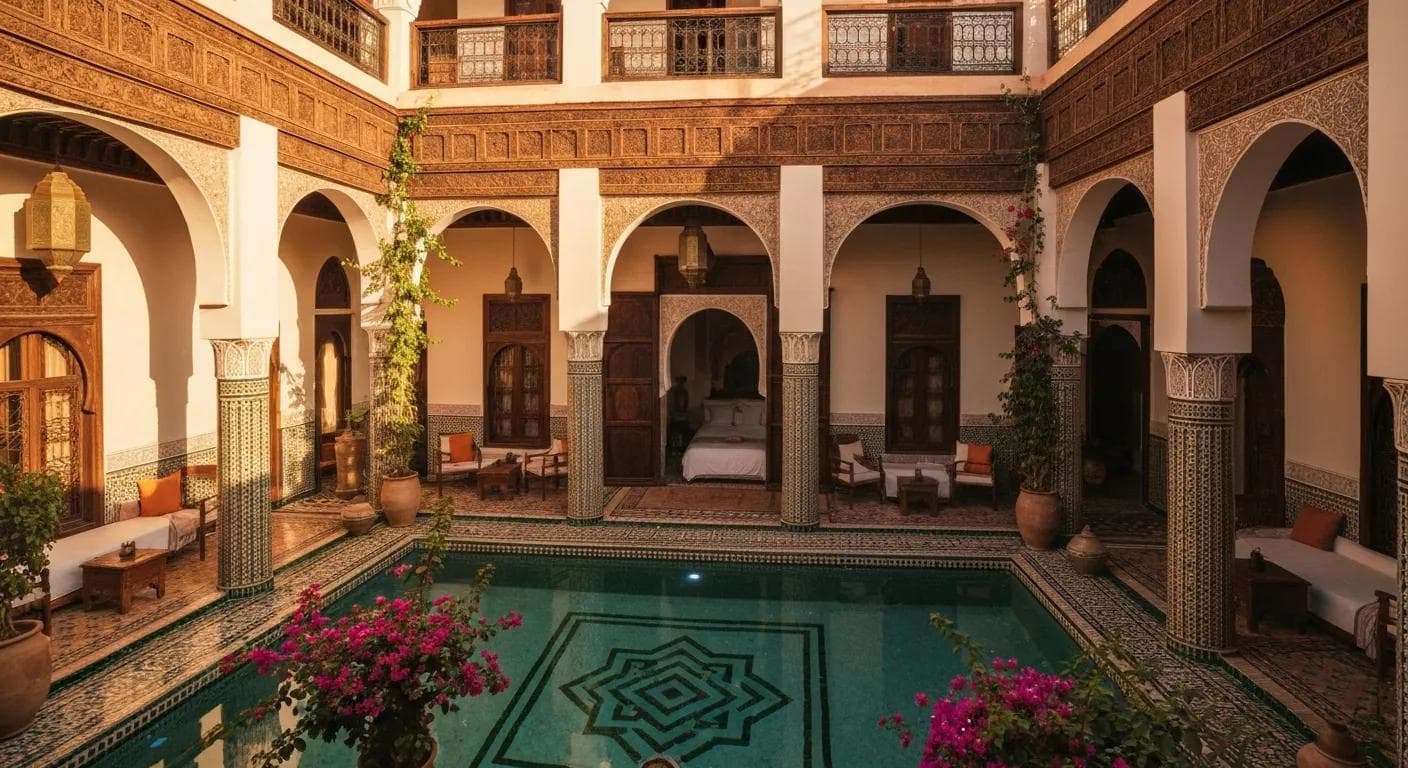
A riad is a traditional Moroccan lodging defined by an internal, open-air courtyard that provides shade, cooling, and a social center, and its architecture and hospitality focus create an intimate, authentic stay. Historically a form of urban dar, a riad often integrates zellige tiles, carved cedarwood, and a central fountain, which function both as decoration and passive cooling. This inward focus contrasts with modern hotels and supports privacy and local craftsmanship, so travelers seeking cultural immersion tend to prefer riads. Understanding these design and hospitality elements helps you decide whether a riad's experience aligns with your priorities for comfort, authenticity, and atmosphere.
The following subsections break down the signature features and clarify how riads differ from similar traditional houses and hotels.
What Are the Key Features of a Moroccan Riad?
A riad's defining feature is its courtyard, which serves as the thermal core and social hub for guests, and that courtyard often contains a fountain and planting that moderate temperature. Decorative elements such as zellige tilework and carved cedarwood are meronyms of riad architecture that communicate regional craft traditions and visual identity. Typical amenities include a rooftop terrace for views and sunbathing, a small plunge pool or fountain for cooling, and sometimes an on-site hammam for wellness; these parts collectively create a layered guest experience. In practical terms, riads generally have fewer rooms than hotels, focusing on personalized service and local design rather than large-scale facilities. These features set expectations for noise levels, accessibility, and the degree of modern conveniences you should confirm before booking.
How Does a Riad Differ from a Dar or Hotel?
A dar and a riad are closely related: both are traditional houses, but a riad is specifically organized around a formal inner courtyard and often restored for guest accommodation, whereas a dar may refer more generally to an older residential house. A riad emphasizes inward-facing spaces and artisanal decoration, while a hotel typically offers outward-facing rooms, standardization, and larger public facilities. For travelers, the differences translate into experience trade-offs: riads offer authenticity, intimate service, and often unique design elements, while hotels provide predictable amenities such as 24/7 reception, elevators, and larger pools. Knowing this distinction informs choices when accessibility, consistent service, or group logistics outweigh the value of an authentic courtyard-centered stay.
The Riads of Morocco: Characteristics and Tourist Potential A menudo se confunden en la terminología los "riads" y los "dars", si bien se trata de viviendas tradicionales con sensibles diferencias. Los riads son más grandes y espaciosos que los dars, aunque presentan igualmente una distribución de "planta baja + primer piso", ya que están diseñados para casi cuatro generaciones de la misma familia bajo un mismo techo. Los Riads presentan una fachada exterior formada por un muro ciego de hasta 8 metros de altura, completamente neutro, sin apenas ventanas. Estos Riads se erigieron para evitar que ojos indiscretos vieran el interior. En el centro del Riad suele disponerse una fuente, ricamente decorada con "azulejos" de zellige y yeso tallado, así como rodeada de cuatro jardines separados que contienen árboles frutales tales como limoneros, higueras, árboles de menta, etc. que desprenden una sutil fragancia para los lugareños. En Marruecos, los Riads son muy comunes en las antiguas "Médinas" y se benefician de una historia muy rica.
Riad vs. Hotel in Morocco: Which Accommodation Suits You Best?
A clear comparison between riads and hotels helps you match accommodation to your travel needs by focusing on authenticity, service style, amenities, and logistical ease. In essence, riads deliver personalized hospitality and cultural immersion in compact, design-rich settings, while hotels deliver scale, predictable facilities, and easier accessibility. This decision framework helps different traveler types—couples seeking romance, families needing space, or remote workers requiring reliable Wi-Fi—choose the right lodging form.
Below is a concise comparison table to highlight practical differences and guide your accommodation choice.
| Accommodation Type | Characteristic | Typical Impact |
|---|---|---|
| Riad | Inward courtyard, artisanal decor | High authenticity and privacy, limited large-scale facilities |
| Hotel | Standardized rooms, external access | Predictable amenities, easier logistics and accessibility |
| Guesthouse/Dar | Smaller, local-house feel | Intimate local experience, variable services |
This comparison clarifies that your priorities—authentic design and personalized service versus consistent facilities and accessibility—should determine whether you choose a riad or a hotel. The next subsection lists concrete advantages and disadvantages to sharpen that decision.
What Are the Advantages and Disadvantages of Staying in a Riad?
Staying in a riad offers strong authenticity, bespoke hospitality, and architectural character that combine to create memorable stays, particularly for travelers who value cultural immersion. Riads frequently provide personalized breakfasts, local recommendations, and a calm courtyard atmosphere, but they may lack 24-hour reception, extensive wellness facilities, or elevator access, which can be a drawback for some visitors. Noise and narrow medina alleys can affect arrivals and mobility, and riads often require walking through pedestrian streets, which impacts luggage handling and accessibility. For couples or solo travelers seeking atmosphere and personalized service, riads are ideal; for travelers needing consistent, full-service amenities or mobility-friendly infrastructure, a hotel may be preferable. This leads naturally into scenarios where hotels are the better choice.
When Is a Hotel a Better Choice Than a Riad?
A hotel is often preferable when travelers prioritize consistent service hours, on-site large-scale amenities, or accessibility features like elevators and street-level rooms. Business travelers, large family groups, and guests who require disability access or immediate transport connections benefit from hotels' standardized operation and larger facilities. Hotels also simplify logistics for event planning or group bookings because they typically have dedicated conference spaces and extensive support staff. If your itinerary requires late or early arrivals, frequent transfers, or guaranteed on-demand services, a hotel's operational model will suit you better. Understanding these factors helps align accommodation format with travel needs and timing.
How to Choose Your Riad: Key Factors to Consider in 2025
Choosing a riad in 2025 means balancing location, amenities, budget, sustainability, and digital needs for remote work or wellness. A stepwise decision framework helps you evaluate options efficiently: identify your priority neighborhood, list non-negotiable amenities, set a realistic budget tier, assess review reliability, and confirm accessibility details. Recent travel trends emphasize sustainable practices, reliable high-speed Wi-Fi, and wellness offerings like hammams, so incorporate those into your checklist. The next subsections unpack how location, amenities, size, budget, reviews, and accessibility influence the riad experience and how to verify each factor before booking.
How Does Location Affect Your Riad Experience in Marrakech and Beyond?
Location determines daily convenience, noise levels, and cultural proximity; a riad in the central medina places you within walking distance of markets and major sights but often near busy squares and nightlife. Neighborhood choices—whether close to a main square for nightlife or in a quieter kasbah quarter—affect walkability and transfer logistics, and the Atlas Mountains or coastal towns change climate expectations and rooftop usability. Transfers from airports or train stations may involve navigating narrow alleys where taxis drop guests at a nearby point, so confirm arrival logistics in advance. Mapping your priorities—sightseeing convenience, peace, or scenic views—dictates the best neighborhood for your riad selection.
What Amenities Should You Look for in a Moroccan Riad?
Prioritize comforts that matter for your trip: reliable air conditioning and hot water for seasonal comfort, dependable Wi-Fi for remote work, and an on-site hammam or rooftop terrace for wellness and relaxation. Experience enhancers include in-house dining, small pools, and roof terraces that provide sun and views, while practical services like airport transfers and flexible check-in improve logistics. In 2025, sustainability credentials and clear policies on responsible sourcing and energy use are increasingly relevant, especially for longer stays. This amenity checklist helps you evaluate listings and formulate precise pre-booking questions to confirm the features you need.
The traditional architecture of riads also offers significant benefits for environmental sustainability, particularly in their passive cooling capabilities.
Urban Sustainability: Riads and Passive Cooling in Morocco The appeal of the Ryad but also serves as an effective passive cooling measure, contributing to...
How Do Budget and Riad Size Influence Your Choice?
Price tiers correlate with service level and privacy: luxury riads tend to offer more rooms, curated services, and wellness facilities, mid-range options balance comfort with local charm, and budget riads deliver authentic experience with fewer amenities. Smaller riads (fewer rooms) often mean quieter settings and more personalized service but less redundancy for availability and facilities, while larger boutique riads may support more consistent services. For groups, consider private-rental options or booking adjacent rooms and confirm cancellation policies. Understanding these budget vs. size trade-offs helps set realistic expectations for space, service, and price.
Why Are Reviews and Accessibility Important When Choosing a Riad?
Reviews reveal operational details that listings omit—cleanliness, staff helpfulness, noise, and accuracy of photos—so prioritize recent reviews and multiple sources to triangulate reliability. Accessibility issues are common in medina riads: stairs, narrow alleys, and lack of elevators can present real challenges for mobility-limited travelers, so verify the number of steps and arrival logistics. Ask hosts for recent photos of stairways and room access and confirm support for luggage transfers or pickups at a nearby point. Checking reviews for specific accessibility mentions and contacting riads directly reduce surprises and ensure the accommodation meets your needs.
What to Expect from the Riad Experience: Hospitality, Cuisine, and Culture
A riad stay combines hospitality rituals, in-house cuisine, and direct cultural interactions that make the visit immersive and personal. Hosts often provide welcome rituals like mint tea, curated local recommendations, and assistance booking guides or transfers, which enhances the guest's understanding of local life. Food offerings typically include hearty Moroccan breakfasts and optional private dinners featuring tagine, couscous, and regional specialties, and some riads offer cooking classes for hands-on cultural exchange. Proper etiquette and respectful engagement with hosts and neighborhoods deepen the experience, and the next subsections detail typical hospitality behaviors, culinary options, and ways riads facilitate cultural immersion.
How Does Moroccan Hospitality Enhance Your Stay in a Riad?
Moroccan hospitality in riads manifests through personalized gestures—morning mint tea, warm greetings, and hosts acting as informal concierges who recommend market stalls and local artisans. Hosts often arrange guided medina walks or recommend trusted guides and can coordinate transfers or special requests, creating a service relationship beyond transactional stays. These small acts enrich the travel experience and foster genuine cultural exchange, but they also mean expectations for reciprocity and respect in interactions. Understanding hospitality norms helps guests ask for what they need while appreciating the personalized care that defines riad stays.
What Moroccan Cuisine Experiences Are Offered in Riads?
Many riads include breakfast as part of the stay—fresh bread, olives, cheeses, and sweet mint tea—and may offer optional private dinners where hosts prepare tagines, couscous, and seasonal salads. Cooking classes or market visits arranged by riad staff let guests learn local techniques and source ingredients, providing hands-on culinary immersion. Ask about dietary restrictions and pricing before confirming meals, as in-house dining can be an added cost; verifying whether ingredients are locally sourced or seasonal supports sustainability-conscious travel. These culinary opportunities convert simple meals into memorable cultural experiences.
How Can Staying in a Riad Provide Authentic Cultural Immersion?
Staying in a riad offers direct access to local craft traditions, connections to medina life, and opportunities to meet artisans through host introductions or recommended souk tours. Hosts frequently arrange activities that place guests in local contexts—artisan demonstrations, guided food tours, or off-the-beaten-path neighborhoods—helping travelers engage respectfully with local customs. Observing and practicing basic etiquette, such as modest dress in certain neighborhoods and polite greetings, enhances mutual respect and enriches interactions. This immersive dimension turns accommodation into a portal for meaningful cultural exchange.
How to Book a Riad in Morocco: Tips, Platforms, and Timing for 2025
Booking a riad effectively requires comparing platforms, understanding seasonal availability, and asking precise pre-booking questions to avoid surprises—especially given 2025 trends favoring sustainability, remote-work readiness, and flexible cancellation policies. Choose platforms knowing the trade-offs between price, flexibility, and direct communication; confirm cancellation terms and verify amenity claims with the riad directly. Below is a practical EAV table comparing booking approaches to help you weigh options and prepare a concise checklist of questions to send before you confirm a reservation.
Booking platforms differ in fees, flexibility, and customer support, so use the table to determine which approach suits your priorities.
| Booking Approach | Common Characteristic | Practical Benefit |
|---|---|---|
| OTA (Online Travel Agency) | Price comparison and user reviews | Easy discovery and often competitive rates |
| Boutique platform | Curated listings and niche properties | Better curation and property vetting |
| Direct booking | Communication with host and potential perks | Greater flexibility and personalized arrangements |
Selecting the right booking approach depends on whether you value price hunting, curated authenticity, or direct flexibility; contacting the riad to confirm details is a recommended verification step that reduces risk.
Which Booking Platforms Offer the Best Deals and Flexibility?
OTAs provide broad search filters and aggregated pricing, which helps with discovery but can mask flexible cancellation or direct perks, while boutique platforms focus on curation and often highlight design and sustainability features. Direct booking typically yields the best communication with hosts and sometimes offers extras like transfers or personalized check-in, though price may not always be lower. Verify cancellation policies, ask for confirmations in writing, and confirm Wi-Fi speed or hammam availability directly to avoid misunderstandings. This combination of strategies balances price, service flexibility, and the reliability of listing details.
When Is the Best Time to Book Your Riad for Availability and Price?
Peak tourist seasons—spring (March to May) and early fall (September to October) in many Moroccan cities—drive higher prices and limited availability, especially for boutique riads; book several months in advance for peak travel. Off-peak winter months offer lower rates and greater flexibility, though some smaller riads may close for renovations or staff holidays, so check opening dates. For festivals and events, lead times increase significantly; confirm dates and local events when planning. A practical rule: book 3–6 months ahead for peak seasons and 1–2 months for off-peak travel, and always verify recent reviews close to your stay.
What Questions Should You Ask Before Confirming Your Riad Reservation?
Asking focused questions pre-booking ensures the riad meets your needs and prevents surprises on arrival—confirm logistics like airport pickup availability, late check-in policies, and where taxis can drop off guests in medina alleys. Verify physical accessibility (number of stairs, presence of elevators), amenity details (air conditioning, Wi-Fi speed, hot water), and any additional fees for meals or hammam services. Ask for recent photos of the room and access route, and confirm cancellation and refund terms in writing. Sending a short, clear checklist to your host improves clarity and helps you compare options objectively.
- Please confirm airport pickup options and estimated drop-off point in the medina.
- Do rooms have air conditioning and what are typical Wi-Fi speeds during the day?
- How many steps are there to the room and can staff help with luggage upon arrival?
These questions let you verify essential logistics and amenities and reduce booking uncertainty when multiple riads appear similar.
Where to Find the Best Riads in Marrakech and Other Moroccan Cities
Finding the best riads depends on aligning neighborhood character with traveler priorities; in Marrakech look for medina proximity for nightlife or kasbah quarters for quieter stays, while Fes and Essaouira require attention to medina layout and climate differences. Rather than naming specific properties, prioritize selection criteria by tier—luxury, mid-range, budget—so you can filter listings or search queries effectively. The following curated guidance explains what to expect per tier and how to assess riads outside Marrakech to ensure the right fit for your itinerary.
What Are the Top Luxury, Mid-Range, and Budget Riads in Marrakech?
Instead of naming properties, use these selection criteria when evaluating riads by tier: luxury riads often feature multiple public spaces, professional spa and hammam services, curated dining, and higher staff-to-guest ratios; mid-range options balance comfort with authentic decor, offering reliable Wi-Fi and kitchen service; budget riads provide essential comfort, strong local character, and simpler facilities. When reviewing listings, look for recent guest photos, clear amenity lists, and up-to-date cancellation policies. This approach helps you identify riads that match price expectations and service levels without relying on specific property names.
- Luxury selection criterion: multiple guest spaces, professional wellness services, and curated dining.
- Mid-range selection criterion: consistent comfort, reliable Wi-Fi, and authentic design elements.
- Budget selection criterion: essential amenities, central location, and strong local character.
Applying these criteria to listings allows you to compare riads effectively across price tiers and make well-informed booking choices.
Which Riads Are Recommended Outside Marrakech in Fes, Essaouira, and Beyond?
When choosing riads outside Marrakech, adapt to regional differences: Fes medina streets are narrower and steeper, so prioritize accessibility and verified arrival instructions; Essaouira's coastal climate favors riads with wind-protected terraces and casual dining; smaller towns may have fewer listings, so prioritize recent reviews and host responsiveness. For each city, filter by the same tiered criteria—amenities, service level, and verification of access—and seek hosts who provide clear arrival guidance and transfer options. This regional awareness ensures you select riads that match both local conditions and your travel priorities, whether you value quiet coastal terraces or deep medina immersion.
- Assess regional access: Confirm arrival logistics for narrow medina streets and drop-off points.
- Match amenities to climate: Look for sheltered terraces in coastal towns and reliable heating in cooler interiors.
- Prioritize host responsiveness: In smaller markets, prompt communication signals operational reliability.
These practical filters help you find well-suited riads across Morocco's diverse cities and landscapes.