Benefits of Staying in a Riad — Authenticity, Prime Location, and a Distinctive Atmosphere

Benefits of Staying in a Riad — Authenticity, Prime Location, and a Distinctive Atmosphere
A riad is a traditional Moroccan courtyard house converted for guests; choosing one instantly places you inside local architecture, daily rhythms, and sensory traditions that larger hotels rarely capture. This guide explains what a riad is, why its inward-facing layout promotes privacy and cooling, and how courtyard gardens, zellige tilework, and rooftop terraces come together to create the unmistakable riad experience. If you want cultural immersion, a quieter refuge inside a busy medina, or sweeping rooftop views, you’ll find practical advice on architecture, location, atmosphere, and typical amenities. We link architectural features to cultural meaning, outline the advantages of a medina location and walkable access, and list common riad comforts such as hammams and plunge pools. Along the way you’ll get sensory descriptions, quick decision-making tips for choosing a riad, and clear comparisons that explain why many travelers favor a riad over a conventional hotel. By the end, you’ll understand how design, hospitality, and setting shape an authentic Moroccan stay.
What Makes Staying in a Riad an Authentic Moroccan Experience?
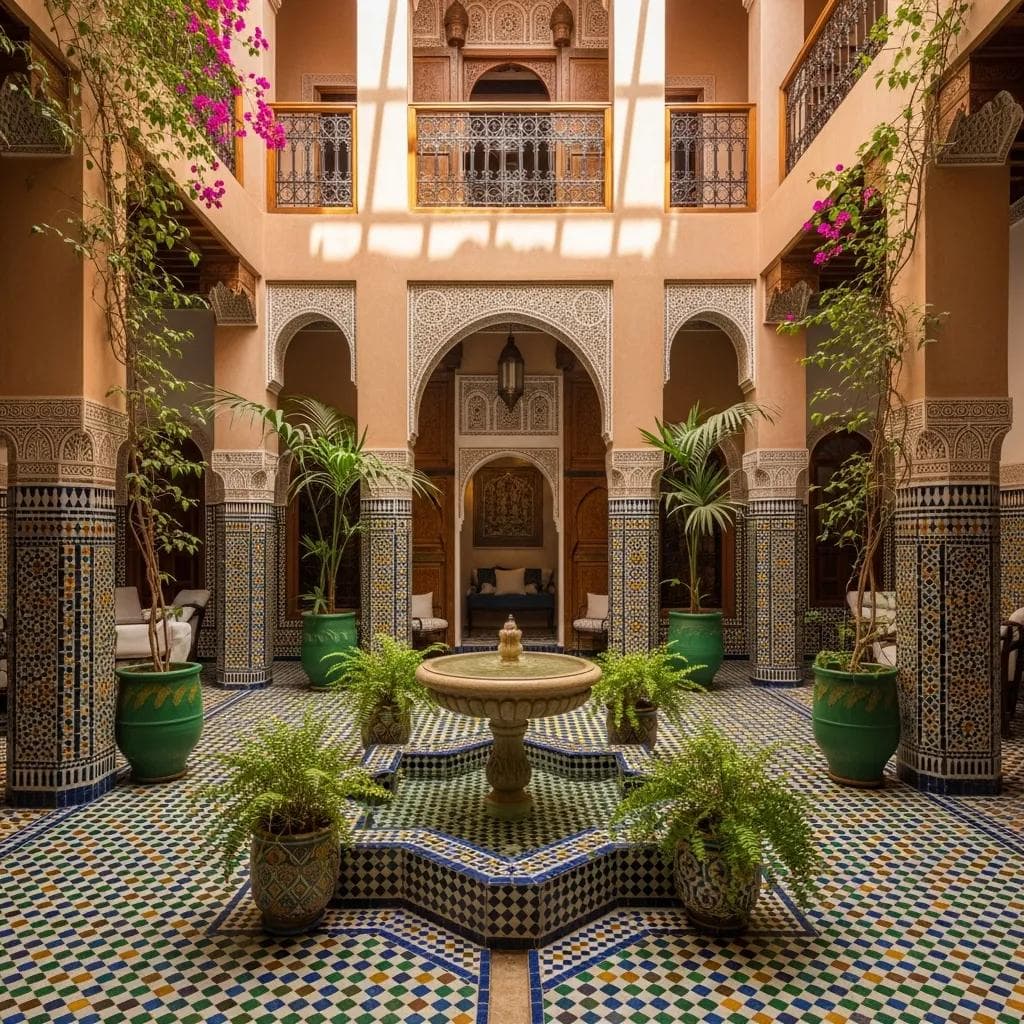
A riad is a Moroccan home arranged around an inward-facing courtyard; that layout concentrates ornament, social life, and passive climate control into a compact, lived-in core guests share. The inward focus creates privacy and a cooler microclimate; the outcome feels like staying in a local home rather than in a standardized lodging.
Inside you’ll notice artisanal details—zellige tilework, carved plaster, and tadelakt—that speak directly to Morocco’s craft traditions and an ongoing lineage of makers. Here are three immediate ways a riad makes a stay feel genuine and memorable.
- Architectural craft: Decorative tiles, carved wood, and courtyard planning showcase Morocco’s artisan skills and aesthetic logic.
- Personal hospitality: Many riads are family-run or small-scale, so service tends to be warm, guided, and richly local.
- Medina integration: Being embedded in historic neighborhoods puts you within daily markets, rituals, and neighborhood life.
That mix of craft, hospitality, and location frames the riad as an experience-first choice—one that emphasizes cultural immersion and intimate service over the uniform comforts of larger hotels.
How Does Riad Architecture Reflect Moroccan Tradition?

Riad design organizes living spaces around a central courtyard where light, water, and shade are carefully balanced; this courtyard acts as both a climatic regulator and the social heart of the house.
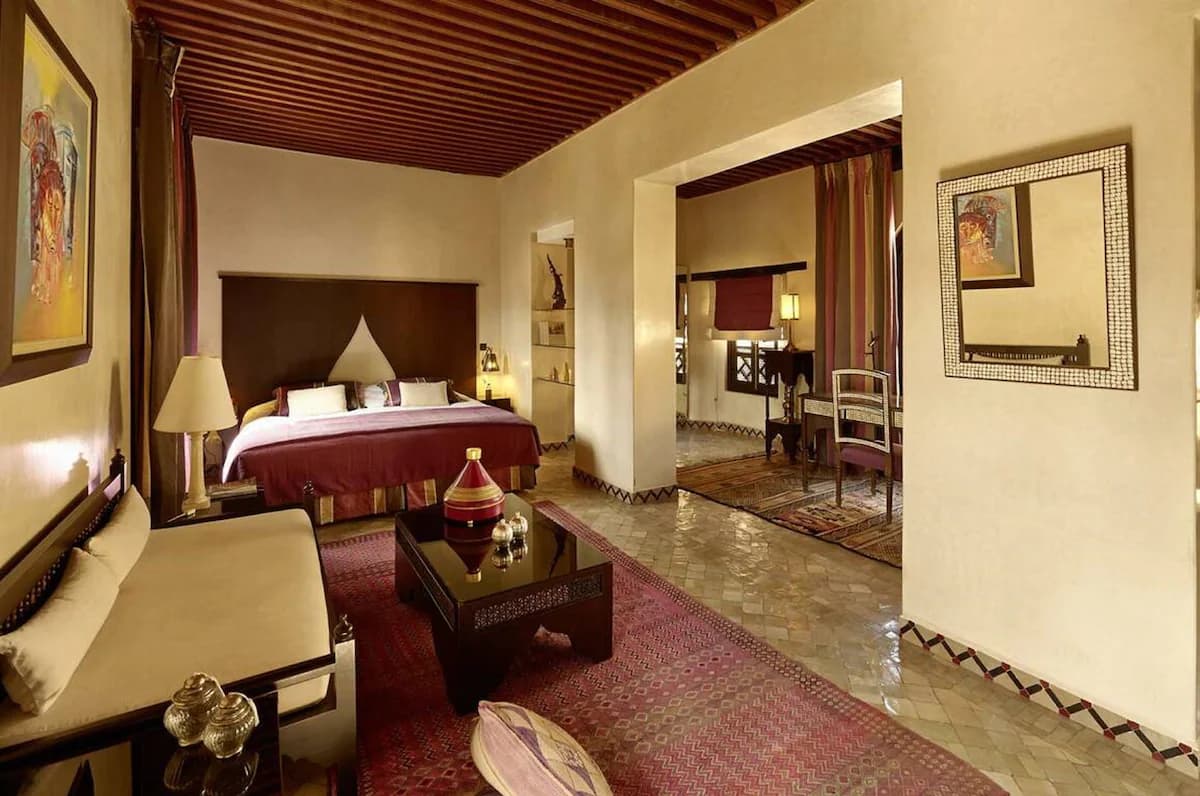
Zellige tilework, carved wood elements, and tadelakt plaster are distinct components of riad interiors—individual pieces that together signal Morocco’s material culture and artisanal tradition.
Zellige creates patterned, reflective surfaces that anchor interiors visually, while tadelakt provides a smooth, breathable plaster finish that helps moderate humidity and temperature.
Practically, high exterior walls and rooms facing inward reduce street noise and increase privacy, producing restful interiors even inside dense medina neighborhoods.
Recognizing these materials and layouts explains both the aesthetic appeal and the everyday benefits of staying in a riad.
Riads of Morocco: Architecture, Courtyards, and Medina Location
Traditional riads often present a neutral, window-light exterior—a tall, mostly blank facade up to around eight meters high—designed to preserve privacy from the street. At the center of the house a fountain commonly sits, richly decorated with zellige and carved plaster, and is often surrounded by small gardens planted with fruit trees such as lemon, fig, and mint that give the interior air a subtle fragrance. Riads are concentrated in historic medinas and reflect a long architectural history tied to local living patterns.
What Cultural Immersions Can You Expect in a Riad Stay?
A riad stay typically includes small-scale hospitality rituals that invite direct cultural exchange and a taste of regional life.
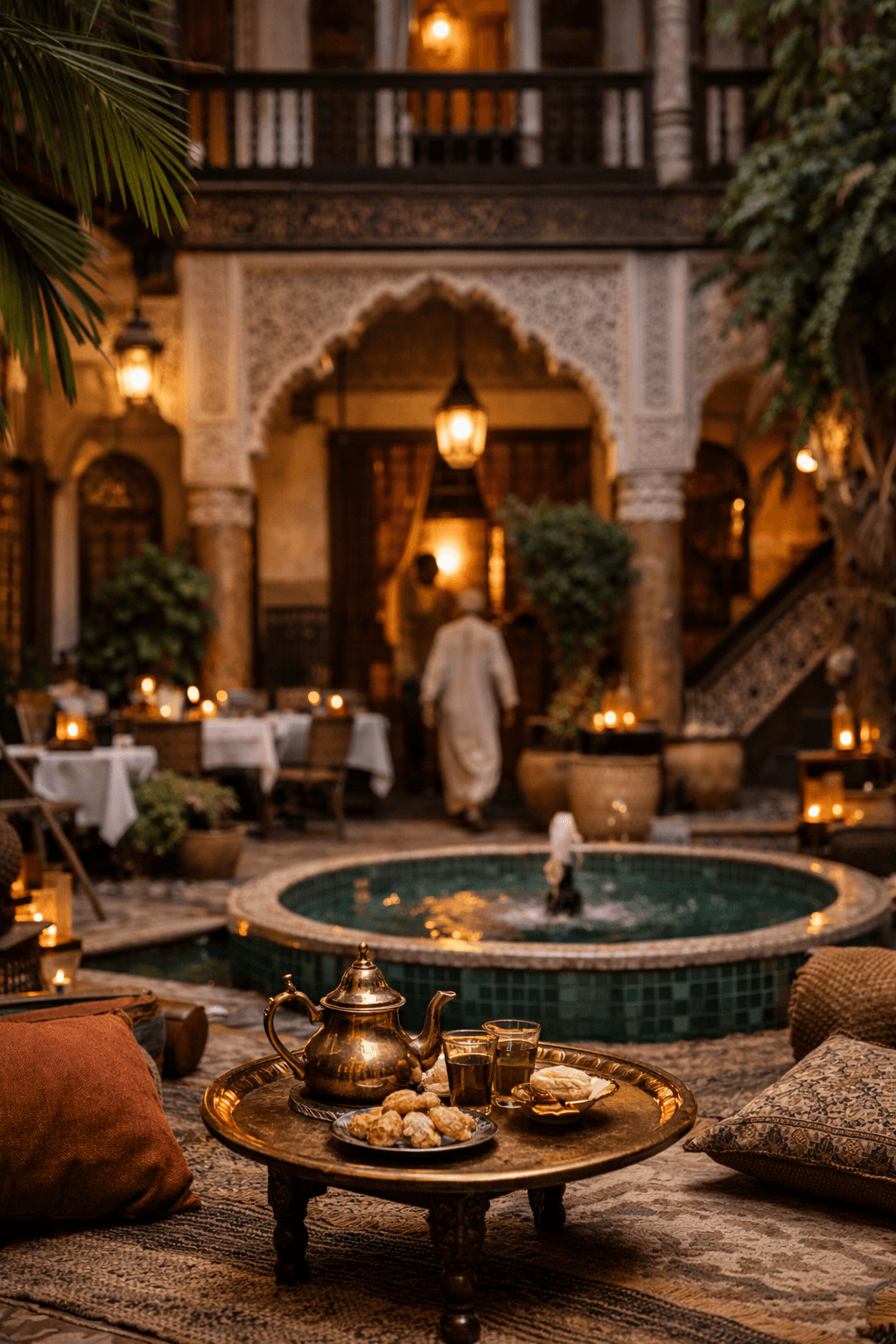
Hosts or small teams commonly serve traditional meals, pour mint tea, and arrange cooking demonstrations or guided walks that introduce local cuisine and daily rhythms.
These moments foster convivial, hands-on learning—guests share family-style dishes, learn spice names, and discover how market ingredients are sourced. Because riads are boutique by nature, attention is often personalized, with curated recommendations and a feeling of being welcomed into a domestic setting rather than simply being serviced.
| Architectural Element | Cultural Attribute | Value |
|---|---|---|
| Zellige tilework | Craft | Patterned surfaces that tell visual stories through geometric and vegetal motifs |
| Tadelakt plaster | Technique | Smooth, breathable finishes that reflect traditional plastering methods |
| Central courtyard | Spatial system | A social hub and microclimate regulator that shapes daily routines |
This mapping shows how specific features work as both craft expressions and practical elements that define the riad experience.
Why Is Location a Key Benefit of Staying in a Riad?
Riads are often tucked into historic medinas, which places you within easy reach of markets, monuments, and neighborhood life while still offering a sheltered, inward-facing retreat from the public bustle.
The advantage is simple: a medina location shortens walking distances to cultural sites and encourages spontaneous exploration, while the riad’s inward orientation creates a quiet interior removed from street noise.
For travelers who prefer exploring on foot and savouring the textures of local streets, a medina riad is a convenient, atmospheric base. Below is a short comparison that illustrates how location enhances the riad’s appeal.
- Walking access: Staying in the medina makes souks, monuments, and cafés a short walk away.
- Local orientation: Immersed in historic quarters, you quickly learn neighborhood patterns and rhythms.
- Balanced experience: Spend vibrant days outside and retreat to a private courtyard by evening.
These location strengths combine exploration with restorative shelter to enhance your Moroccan stay.
How Do Riads Offer Easy Access to Historic Medinas and Souks?
Because riads sit within the woven fabric of medinas, stepping out often means joining a pedestrian network of shops, food stalls, and landmarks—reducing the need for vehicles and encouraging slow, on-foot discovery.
Medina geography clusters points of interest, so a riad can function as a practical hub for planned walks or serendipitous detours.
Hosts frequently offer orientation tips and trusted route suggestions to help guests navigate winding alleys and find reliable artisans or food vendors.
This tight integration with the urban fabric makes a riad stay both convenient and richly contextual.
How Does a Riad Provide a Tranquil Escape Despite Bustling Surroundings?
The inward plan, tall perimeter walls, and central courtyard create an acoustic and thermal buffer that separates interior life from the street’s noise and activity.
Water features and planted courtyards build a calming soundscape, while solid walls reduce dust and traffic sounds.
These design choices produce cooler, steadier interior temperatures and a real sense of retreat—an essential contrast to the medina’s energy. That juxtaposition—lively streets outside, serene courtyard inside—sharpens the riad’s sense of place.
| Riad Location Type | Typical Access Attribute | Example Proximity |
|---|---|---|
| Riad in medina | Walking access to markets | Short walk to local souks (illustrative) |
| Riad near monuments | Easy sightseeing | Central neighborhood orientation (illustrative) |
| Edge-of-medina riad | Quieter streets, still connected | Immediate access to main gates (illustrative) |
This comparison highlights how different medina placements affect convenience and atmosphere without claiming exact distances.
How Does the Atmosphere of a Riad Enhance Your Stay?
A riad’s atmosphere comes from layered sensory details—cool courtyards, reflective tiles, running water, soft textiles, and rooftop light—that together create calm, tactile richness.
Functionally, shiny tiles and water temper light and temperature, while planted courtyards add scent and soften stone and plaster surfaces.
The result supports slow mornings, relaxed afternoons, and atmospheric evenings where architecture frames social life and quiet. Below are the core atmospheric elements guests often mention as defining the riad experience.
- Courtyard focus: Gardens and fountains center daily life and create cool microclimates.
- Rooftop terraces: Elevated spaces for evening breezes, views, and quiet meals.
- Decor and textiles: Layered fabrics, lamps, and tiles that produce intimate visual warmth.
Together these features make a riad more than a place to sleep—they create a carefully curated ambient experience.
What Role Do Courtyard Gardens and Fountains Play in Riad Tranquility?
Courtyard gardens and fountains act as acoustic dampers and visual anchors that reinforce calm and enclosure. The sound of water softens distant street noise, while plants cool the air through evapotranspiration and add seasonal fragrance.
From the surrounding rooms the courtyard composes a private view and a restorative focal point that shapes routines—breakfast, reading, or late-afternoon tea.
This concentrated garden logic turns everyday rooms into a sequence of intimate moments centered on the green space.
How Do Rooftop Terraces Add to the Unique Riad Atmosphere?

Rooftop terraces stretch a riad upward, creating open-air rooms for sunset views, evening meals, or quiet reflection above the medina’s rooftops.
They offer broad views of light and sky, reduce street-level noise, and provide private spots for social moments.
Common uses include dining under the stars, morning yoga, or capturing golden-hour photos—terraces often turn a riad into both a private retreat and a vantage point over the city.
A memorable terrace can be the deciding feature for travelers who prize outlooks and atmosphere.
What Unique Amenities and Features Do Riads Offer?
Riads blend traditional and boutique comforts—hammam access, plunge pools, on-site dining, and rooftop meals—that reinforce relaxation, personalization, and cultural immersion.
Within the riad’s small-scale hospitality model these amenities feel domestic yet indulgent, and they tie directly to core values like personalized service, tranquil atmosphere, medina location, and architectural charm. Below is a concise overview of amenities you’ll commonly find and how they contribute to comfort and authenticity.
- Hammam or steam facilities that offer ritual cleansing and relaxation.
- Small plunge pools or cooling basins for refreshment after exploring.
- Rooftop dining and terraces for breakfasts and evening meals with views.
- Personalized services such as guided walks or hands-on cooking demonstrations.
These offerings support a relaxed pace, cultural learning, and the intimate service model that sets riads apart from larger hotels.
Which Traditional Amenities Enhance the Riad Experience?
Hammams deliver a tactile ritual of steam, soap, and gentle scrubs—an introduction to local bathing traditions that many guests remember long after they leave.
Plunge pools and shaded courtyards provide cool, private retreats during hot afternoons and invite lingering moments of calm.
On-site dining highlights regional dishes, often prepared family-style by hosts or a small kitchen team using seasonal ingredients.
| Amenity | Experience | Typical Value |
|---|---|---|
| Hammam | Traditional steam ritual and relaxation | On-site or nearby traditional treatment |
| Plunge pool | Quick cooling and private refreshment | Small, intimate water feature |
| Rooftop terrace dining | Scenic meals and evening ambiance | Elevated private dining space |
This table clarifies how common riad amenities serve as experiential highlights rather than standardized hotel offerings.
How Does Riad Design Promote Privacy and Comfort?
Riad design centers on inward-facing rooms grouped around the central courtyard, with high external walls that shield interiors from alleys and noise.
The limited number of rooms and the small staffing model allow for attentive, discreet service that feels like being hosted in a private home.
Architectural features—thick walls, shaded loggias, and strategic courtyard placement—also enhance thermal comfort and acoustic separation, creating a restful environment that supports slow travel and meaningful local engagement.
These design choices are the practical reasons travelers experience privacy and intimacy in a riad.
Frequently Asked Questions
What should I consider when choosing a riad for my stay?
Look at location, amenities, and the kind of experience you want. Choose a riad in the medina if you prefer walking to sights; prioritize hammams, plunge pools, or rooftop terraces if comfort and views matter. Read recent guest reviews to judge service quality and responsiveness. In short, match a riad’s location and offerings to how you want to spend your days.
Are riads suitable for families or groups?
Yes—many riads welcome families and groups, with larger suites or connected rooms available at some properties. The home-like atmosphere is often a benefit for families, but policies and room configurations vary, so check with each riad about children, bed arrangements, and group bookings before you reserve.
How do I find the best riad for my budget?
Compare listings on specialist platforms, read reviews, and watch for seasonal rates or package deals. Contacting riads directly can sometimes yield better rates or added perks. Decide which amenities matter most—location, hammam access, terrace—to narrow your options within your budget.
What local experiences can I expect during my stay in a riad?
Expect culinary moments like mint-tea rituals and family-style meals, plus optional activities such as cooking classes, guided medina walks, and introductions to local artisans. These hands-on experiences help you connect directly with regional foodways and neighborhood life.
Can I book excursions or activities through the riad?
Yes—most riads can arrange excursions, local guides, and transport. Many have trusted partners for day trips, desert tours, or cultural visits and will tailor suggestions based on your interests and pace.
What is the typical check-in and check-out process at a riad?
Check-in is usually personalized—hosts often welcome guests with mint tea and a brief orientation to the house. Standard check-in times commonly fall between 2 PM and 4 PM, with check-out around 11 AM, though many riads offer flexible arrangements if you ask in advance. Confirm times directly when booking.
Conclusion
Choosing a riad gives you a blend of authentic Moroccan culture, attentive hospitality, and a tranquil, design-rich setting that many hotels cannot match. The architecture, medina address, and thoughtful amenities create a stay that’s both comfortable and immersive. Pick a riad to turn your visit into a quieter, more personal encounter with Morocco—explore our curated selection to find the one that fits your trip.