Discover the Top 5 Benefits of a Moroccan Hammam - Marrakech

The Top 5 Benefits of Visiting a Moroccan Hammam in Marrakech: Your Ultimate Guide to Wellness and Cultural Experience
A Moroccan hammam is a centuries-old steam bath ritual where heat, cleansing and shared practice come together to refresh the body and offer a genuine cultural moment.
This guide makes clear why a hammam in Marrakech is more than a spa visit: it’s a time-honored routine using steam, savon beldi (black soap), the kessa exfoliating glove, rhassoul clay and argan oil to improve skin texture, circulation and overall relaxation.
If you’re weighing whether to add a hammam to your Marrakech plans, this article lays out evidence-informed mechanisms, vivid sensory cues to set expectations, and practical, step-by-step ritual guidance.
You’ll find the Top 5 health and wellness benefits, a plain-language walkthrough of the ritual, what each product does, how public, private and luxury hammams differ, plus essential etiquette and packing tips so you can participate respectfully and confidently.
Across the piece we use up-to-date, research-informed explanations (June 2024), sensory detail to set expectations, and clear comparison tables and mappings to make planning simple and actionable.
What Is a Moroccan Hammam and Why Is It Unique in Marrakech?
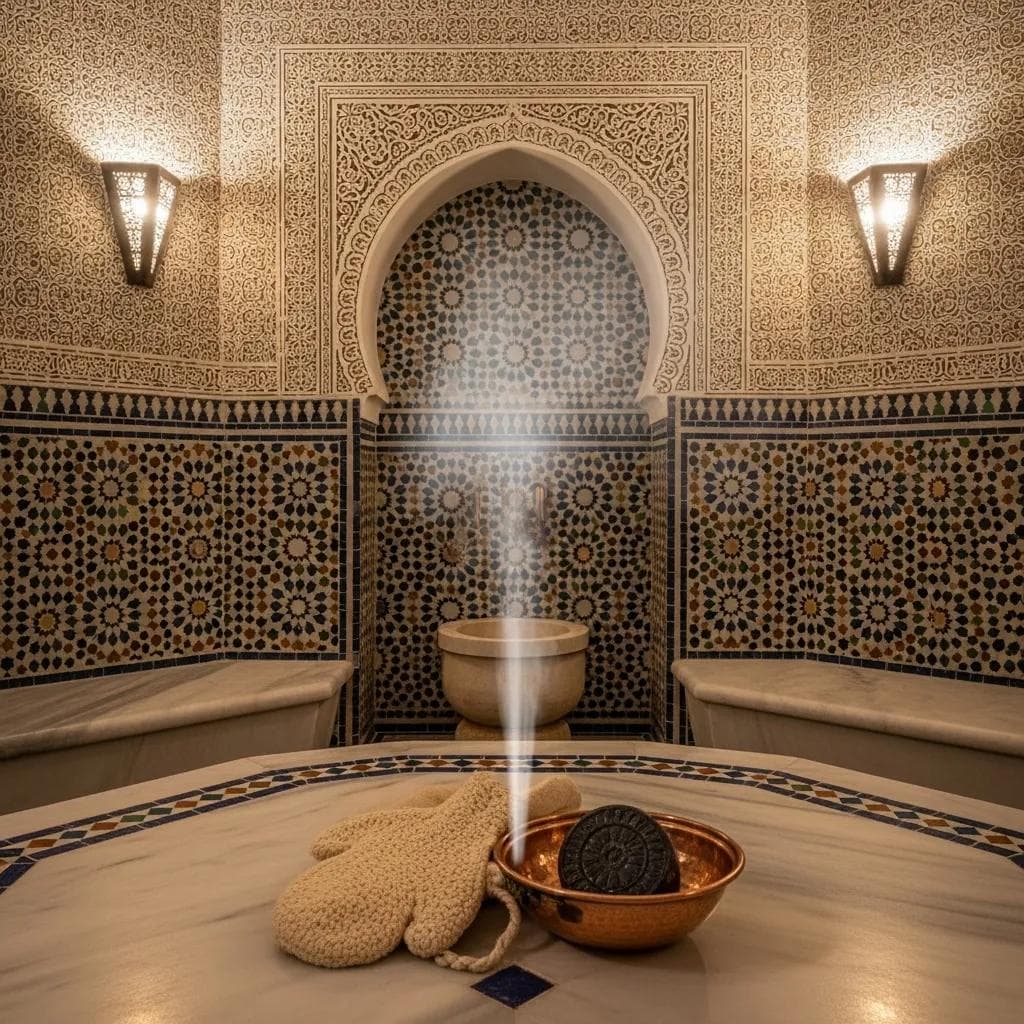
A Moroccan hammam is a traditional steam bath rooted in North African and Islamic bathing customs, centered on communal cleansing, heat therapy and a set sequence of treatments. In Marrakech, hammams stand out because they pair local products—savon beldi, rhassoul from Atlas deposits and argan oil—with handcrafted zellige tilework and staged temperature rooms that deepen the steam experience. That blend of sensory design, product specificity and tourist-friendly private offerings creates a range of options—from neighborhood communal baths to curated luxury rituals—so knowing these traits helps set realistic expectations for how the ritual will feel and what benefits you can expect.
How Does the Traditional Moroccan Hammam Ritual Work?

The traditional hammam follows a predictable sequence: arrival and brief acclimation in a warm room, stepped steam exposure, savon beldi application, mechanical exfoliation with a kessa glove, rinsing, a rhassoul clay mask, a final rinse and a finishing argan oil massage or hydration. Each phase has a clear purpose—steam softens the outer skin, savon beldi loosens surface oils, the kessa physically removes dead cells, rhassoul draws out impurities and argan oil restores moisture and barrier lipids. Sessions commonly run 45 minutes for a straightforward scrub up to 90–120 minutes for a full ritual with massage; a tellak (attendant) usually paces the treatment and adjusts pressure. Expect a sensory arc—humid stillness, an invigorating scrub, then calm relaxation—that prepares the body for the circulatory and relaxation effects discussed below.
With that sequence in mind, next we’ll unpack the signature products and why each matters for skin and wellbeing.
Key ritual steps and typical durations:
- Warm-up and steam (10–20 minutes): gently raises skin and core temperature.
- Savon beldi application (5–10 minutes): softens skin lipids ahead of exfoliation.
- Kessa glove scrub (5–15 minutes): mechanical exfoliation removes dead skin.
- Rhassoul clay mask and rinse (10–20 minutes): mineral-rich cleansing and remineralization.
- Argan oil massage/hydration (5–15 minutes): restores lipids and seals in moisture.
These stages ready the skin and sensory system for immediate smoothing and the deeper circulation and relaxation effects that follow.
What Are the Key Products Used in a Moroccan Hammam?
Four signature items shape the hammam sequence and each delivers a distinct effect: savon beldi (an olive-oil–based black soap) softens the skin and aids exfoliation; the kessa glove provides controlled abrasive scrubbing; rhassoul clay, from the Atlas, adsorbs oils and delivers trace minerals; and argan oil supplies fatty acids and antioxidants to replenish the skin’s barrier. Together they offer chemical softening, mechanical removal, adsorptive purification and lipid replenishment—giving both immediate tactile smoothness and longer-lasting hydration.
Knowing what each product does helps you pick the right hammam style, pressure and aftercare for your skin and wellness goals.
What Are the Top 5 Health and Wellness Benefits of Visiting a Moroccan Hammam?

A Marrakech hammam delivers five main benefits through a mix of thermal, mechanical and topical actions: deep skin cleansing and renewal; improved peripheral circulation and lymph support; stress reduction and parasympathetic activation; muscle relief and recovery; and authentic cultural immersion that supports mental wellbeing. Each benefit springs from a specific physiological or psychosocial mechanism—steam-driven vasodilation, exfoliation-triggered epidermal renewal, heat-plus-touch activation of relaxation pathways—and you can maximize results by choosing session length, pressure and post-care that suit you.
The list below summarizes the top benefits for quick reference and featured-snippet use.
- Deep Skin Cleansing and Exfoliation: Steam and savon beldi loosen oils, and the kessa removes dead cells for smoother, brighter skin.
- Improved Circulation and Mild Detoxification: Heat-driven vasodilation increases blood flow and sweating can support transient excretion.
- Stress Relief and Mental Relaxation: Warmth, scent and rhythmic touch boost parasympathetic tone and lower stress.
- Muscle Relief and Physical Rejuvenation: Heat and massage relax muscles, increase flexibility and aid recovery after long days.
- Cultural Immersion and Social Wellbeing: Taking part in an authentic ritual connects you to local tradition and promotes emotional replenishment.
These five effects make a hammam both a targeted wellness intervention and a memorable cultural experience. The table below links each benefit with its mechanism and a brief example of how it shows up.
| Benefit | Mechanism | Evidence / Example |
|---|---|---|
| Deep skin cleansing & exfoliation | Steam opens pores; kessa removes the stratum corneum | Immediate visible smoothing; better absorption of moisturizers |
| Improved circulation & mild detox | Heat causes vasodilation and sweating; lymph flow increases | Short-term rise in skin blood flow and perspiration-linked excretion |
| Stress relief & relaxation | Heat and rhythmic touch activate parasympathetic pathways | Subjective calm; many report improved sleep after sessions |
| Muscle relief & rejuvenation | Heat relaxes muscle fibers; massage improves circulation | Less stiffness and better range of motion after treatment |
| Cultural immersion & social wellbeing | Communal ritual and sensory narrative | Stronger sense of connection and travel satisfaction |
How Does a Moroccan Hammam Provide Deep Skin Cleansing and Exfoliation?
Deep cleansing comes from a coordinated chemical and mechanical process: warm steam raises skin temperature and porosity, savon beldi’s olive-based saponins emulsify surface oils, and the kessa glove scrubs away the loosened stratum corneum. From a dermatological perspective, removing that outer dead-cell layer speeds visible renewal and improves how well hydrating agents—like argan oil—penetrate, while reducing roughness and build-up. Aftercare with gentle moisturizing and sun protection helps maintain the restored barrier and prevent transepidermal water loss. If you have sensitive skin, ask for lighter scrubbing and shorter steam time to balance benefit and comfort.
Next we look at how heat and sweating influence circulation and mild detoxification.
How Does the Hammam Improve Blood Circulation and Detoxify the Body?
Heat in the hammam causes vasodilation, expanding tiny blood vessels and increasing skin blood flow; this improves nutrient delivery and supports metabolic clearance in peripheral tissues. Sweating enables transient excretion of water-soluble compounds and electrolytes, which people often call “detox,” though major detoxification remains a job for the liver and kidneys. Rhythmic massage and relaxed muscles also stimulate lymphatic movement, which can reduce puffiness. These circulatory effects are generally mild and helpful after travel-related sluggishness, but anyone with cardiovascular conditions should consult their doctor before extended heat exposure.
Improved circulation naturally supports the relaxation and stress-reducing effects we describe next.
How Does the Hammam Promote Relaxation and Reduce Stress?
A hammam soothes through combined sensory and neurophysiological cues: steady warmth lowers sympathetic arousal, rhythmic scrubbing and massage encourage vagal response, and familiar scents like eucalyptus or argan trigger calming associations. Together these inputs boost parasympathetic activation, slow the heart rate and create a restorative calm that often improves sleep. The ritual’s quiet pace and focused attention also foster mindfulness and mental decompression—helpful after long travel days. To deepen relaxation, choose sessions with extra massage and a cool-down period after treatments.
Relaxation naturally links to the muscle relief guests experience during and after a hammam.
How Does the Hammam Help with Muscle Relief and Physical Rejuvenation?
Applying heat to muscles increases tissue extensibility, eases myofascial tension and raises pain thresholds, while massage enhances local circulation and clears metabolites. Together these effects speed recovery from travel fatigue, minor strains or long days on your feet. Heat and targeted kneading help lengthen tight muscle fibers and relieve stiffness—especially in the neck, shoulders and lower back. If you have acute injuries or chronic conditions, get medical advice before deep massage; for general recovery, the hammam is a low-risk, high-return option when tailored to your comfort. Gentle stretching and good hydration afterwards help the benefits last into the next day.
How Does Visiting a Hammam Offer Authentic Cultural Immersion?
Beyond the physical effects, the hammam is a living cultural practice—historically a place for cleansing, socializing and rites of passage—so participating respectfully gives travelers direct insight into Moroccan daily life. Noting gender-segregated spaces, ceremonial cues and traditional product use adds context to the sensory experience and deepens cultural appreciation. Engaging with attendants and local etiquette, when done mindfully, can turn a treatment into a narrative-rich encounter rather than a purely transactional service. That cultural layer amplifies the ritual’s other benefits by connecting sensory renewal with meaning, and research on experiential travel shows this increases wellbeing and memory retention.
Understanding the cultural side helps you choose the right venue, budget and etiquette during your Marrakech visit.
What Should You Expect During Your Moroccan Hammam Experience in Marrakech?
A typical Marrakech hammam moves through acclimation, steam, soap application, scrubbing, rinsing, a clay mask and a finishing massage or hydration—lasting between about 45 minutes for a basic scrub and two hours for a full spa-style ritual. Expect variation in privacy, price and amenities across public, private and luxury hammams; plan your attire and tipping accordingly. The short how-to below and the comparison table will help you match a hammam type to your budget, comfort level and cultural preferences so there are no surprises.
Typical sequential expectations in practice include:
- Arrival and changing: basic prep; some places provide a robe or towel, others expect you to bring one.
- Warm room acclimation: 10–20 minutes to gradually raise body temperature.
- Steam and cleansing: savon beldi application and scrubbing guided by the attendant.
- Mask and rinse: rhassoul or clay application followed by a thorough rinse.
- Finishing: argan oil application or a short massage, then a cooling rest.
Below is a practical comparison of hammam types, typical price ranges (estimates) and expected etiquette to help with planning rather than to serve as fixed pricing.
| Hammam Type | Typical Price Range (estimate) | Typical Experience / Etiquette |
|---|---|---|
| Public hammam | Low to modest | Communal, gender-segregated, basic facilities; bring your own towel and note modesty norms |
| Private hammam | Moderate | Small group or private room, attendant-led ritual, curated products; book ahead |
| Luxury hammam | Higher | Spa-quality amenities, full massage and relaxation areas; usually includes robes and refreshments |
What Are the Differences Between Public, Private, and Luxury Hammams?
Public hammams are communal and budget-friendly, offering an authentic social atmosphere and straightforward scrubbing services run by local attendants. Private hammams provide reserved rooms for couples or small groups, with attendant-led rituals and more control over pressure and timing. Luxury hammams—often in high-end hotels or standalone spas—combine traditional techniques with extended relaxation lounges, spa-grade massages and premium product selections for travelers who prioritize privacy and creature comforts. Booking policies, hygiene expectations and pricing vary: public baths may accept walk-ins, private sessions usually need reservations, and luxury venues typically include extras like refreshments. Choose based on how much authenticity versus comfort you want.
Next, practical etiquette and what to wear when you visit.
What Is the Typical Hammam Etiquette and What Should You Wear?
Etiquette centers on modesty, respect for communal space and following attendant instructions: many hammams separate by gender, photography is discouraged and modest covering or a swimsuit may be required depending on the venue.
Bring a towel or peshtemal, flip-flops and a modest undergarment or swimsuit where permitted; luxury venues often supply robes and slippers.
Point-based tipping for attentive service is customary, and always ask before taking photos or entering shared areas—small respectful gestures go a long way.
When unsure, watch local clients or ask staff quietly—this polite approach improves your experience and honors local customs.
How Do Moroccan Hammam Products Enhance the Benefits of the Ritual?
Hammam products work through complementary biochemical and mechanical mechanisms that boost the ritual’s outcomes: savon beldi softens surface lipids to aid exfoliation, the kessa glove provides controlled mechanical removal, rhassoul clay adsorbs excess sebum while depositing minerals, and argan oil replenishes essential fatty acids and antioxidants to repair the skin barrier.
Used in sequence, these products are synergistic: cleansing improves clay contact, exfoliation prepares the skin for oil-based hydration, and argan oil seals moisture to prolong visible results. The table below links each product to its main attribute and the skin or wellness benefit it delivers so you can see how product choice maps to outcomes.
| Product | Main Attribute | Skin / Wellness Benefit |
|---|---|---|
| Savon Beldi | Olive oil base + saponins | Softens skin and prepares for mechanical exfoliation |
| Kessa Glove | Coarse textured mitt | Removes dead cells; leaves skin visibly smoother |
| Rhassoul Clay | Mineral-rich adsorbent | Absorbs excess oil and deposits trace minerals |
| Argan Oil | High in oleic/linoleic acids & antioxidants | Restores lipids; hydrates and protects the skin barrier |
What Are the Skin Benefits of Savon Beldi Black Soap?
Savon Beldi is a dense, olive-oil–based black soap that softens the epidermis by emulsifying surface lipids, making mechanical exfoliation more effective. Its lipid content leaves skin supple rather than stripped, and eucalyptus or essential-oil variants add calming scent during steam. Savon Beldi suits normal and oily skin as a preparatory cleanser; sensitive skin may prefer lighter application and shorter contact. Applying argan oil after the scrub helps replace any short-term moisture loss and supports barrier recovery.
Savon Beldi’s preparatory action naturally sets up the kessa glove’s mechanical exfoliation.
How Does the Kessa Glove Improve Exfoliation?
The kessa glove is a textured mitt built for controlled abrasion that removes the outer stratum corneum and unclogs pores after the skin has been softened by steam and soap. Proper technique—moderate pressure, even strokes and steady speed—produces immediate smoothness and reduces flakiness while avoiding microtears from excessive force. First-timers should ask attendants for lighter pressure to assess tolerance; argan oil afterwards soothes and rehydrates the newly exposed epidermis. By improving skin permeability in a measured way, the kessa increases the effectiveness of follow-up products.
Next, we explain how rhassoul clay adds a complementary purifying and remineralizing effect.
What Are the Detoxifying Properties of Rhassoul Clay?
Rhassoul clay, mined from volcanic deposits in the Atlas region, is rich in silicates and minerals that adsorb excess oils and impurities while offering gentle mineral nourishment. As a paste, rhassoul pulls sebum and surface contaminants into its structure and, when rinsed, leaves skin felt-toned without harsh stripping. Its trace minerals can support surface repair and texture, especially for oily or combination skin. Frequency depends on your skin type, but rhassoul masks in hammam rituals provide a periodic deep-cleanse that pairs well with regular moisturizing routines.
After rhassoul’s clarifying action, argan oil finishes the ritual by replenishing lipids and protecting skin integrity.
How Does Argan Oil Support Skin Hydration and Massage?
Argan oil is rich in monounsaturated fatty acids (oleic and linoleic acids) and tocopherols that help rebuild the skin barrier, lock in moisture and provide antioxidant protection. Applied after exfoliation and rhassoul rinses, argan oil penetrates the upper dermis to restore lipids, reduce transepidermal water loss and leave skin satiny when used sparingly. It’s also used in short finishing massages to combine hydration with circulation-boosting strokes that prolong the hammam’s calming and recovery effects. For sensitive skin and hair, choose authentic pure argan oil and check scent and texture to avoid diluted blends.
Argan oil’s restorative role ties the ritual sequence into a cohesive skin-health and sensory result—one reason hammams remain relevant to modern wellness travelers.
Why Is Visiting a Moroccan Hammam in Marrakech a Must for Wellness Travelers?
Hammams fit current wellness tourism trends by offering authentic, experience-focused treatments that highlight natural ingredients, hands-on therapies and cultural immersion—qualities that have driven interest in traditional wellbeing practices through 2024. Travelers increasingly seek place-based rituals with sensory authenticity and measurable effects; the hammam’s mix of steam, exfoliation and massage delivers both. Visitors report immediate physical gains—smoother skin, looser muscles—and longer-lasting psychological benefits like reduced travel stress and deeper cultural connection, making the hammam a high-value stop on Marrakech itineraries for those seeking rooted, evidence-informed self-care.
How Does the Hammam Experience Align with Wellness Tourism Trends?
Wellness travel now emphasizes authenticity, local sourcing and integrated experiences that pair physical benefits with cultural storytelling, and the Moroccan hammam matches this model. Demand has grown for natural beauty rituals and heritage-driven services over generic spa menus. The hammam’s multisensory and social aspects also support experiential metrics—longer stays, higher satisfaction and greater cultural learning—that destination planners and wellness researchers track. These trends suggest that adding a hammam visit to your Marrakech trip is both culturally respectful and aligned with modern wellness preferences.
Those trend dynamics mirror what visitors commonly report after their hammam visits, which we summarize next.
What Are Visitors Saying About Their Marrakech Hammam Experiences?
Guests frequently describe hammam visits as transformative: many note smoother skin, eased muscle tension and a deep sense of calm after the ritual, often calling out the tactile kessa scrub and the warm, nutty scent of argan oil. First-timers sometimes mention surprises—scrub intensity, heat tolerance or the communal atmosphere—which is why communicating with attendants and easing in gradually is recommended.
Overall feedback centers on three outcomes: physical renewal, mental decompression and enhanced cultural appreciation—making the hammam a repeatable and recommended highlight for wellness-focused travelers.
Frequently Asked Questions
What is the best time of day to visit a Moroccan hammam?
Timing depends on your preference and the experience you want. Early morning or late afternoon are popular because the hammam is often quieter then, which makes for a more tranquil visit and more attentive service. Off-peak slots can improve relaxation and let attendants spend more time with you. If you have other plans, consider scheduling the hammam before a meal so you can fully enjoy the post-treatment calm.
Can children visit a Moroccan hammam?
Children can visit some hammams, but policies vary. Many public hammams are gender-segregated and may not accommodate youngsters, while private or luxury venues sometimes offer family-friendly options. If you bring children, choose a private setting to control pace and comfort, and confirm the hammam’s age rules in advance.
How should I prepare my skin before visiting a hammam?
A little prep improves results: gently exfoliate a day or two before to reduce heavy flaking, and stay well hydrated in the days leading up to your appointment so your skin responds better to steam and treatments. Avoid heavy lotions or oils on the day itself—hammam treatments will focus on cleansing and exfoliation.
What should I expect in terms of privacy during my hammam experience?
Privacy varies by venue. Public hammams offer a communal, gender-segregated experience that may feel less private. Private and luxury hammams provide single rooms or small-group settings for a more intimate experience. If privacy matters, book a private or luxury option so you can relax without others present.
Are there any health conditions that might prevent someone from using a hammam?
Most people can enjoy a hammam safely, but certain conditions call for caution. If you have cardiovascular issues, respiratory problems, significant skin sensitivities or are pregnant, check with a healthcare professional before using steam baths. If you feel lightheaded or unwell during a session, step out to cool off and notify staff. Always tell attendants about health concerns before your treatment.
What are the typical durations for different hammam treatments?
Durations vary by package: a basic scrub is typically about 45 minutes, while a full ritual with steam, exfoliation, mask and massage runs 90–120 minutes. Luxury venues may offer longer, more indulgent sessions. When booking, confirm the exact length so you have enough time to enjoy the full treatment without rushing.
What Are the Main Benefits of a Moroccan Hammam?
The main benefits are deep exfoliation and skin renewal, improved peripheral circulation, stress reduction, muscle relaxation and cultural immersion. Together these outcomes combine physiological mechanisms—steam-induced vasodilation, mechanical removal of dead skin, and parasympathetic activation—with meaningful local ritual that enhances overall travel wellbeing.
This short summary highlights the multi-dimensional value we covered in earlier sections.
How Much Does a Hammam Cost in Marrakech?
Prices depend on the hammam type: public baths are the most affordable, private sessions sit in the mid-range, and luxury hammams command higher rates for extended services and amenities. Costs vary with included treatments, duration and whether massage or premium products are included. Always verify current rates when booking, consider off-peak times for savings, and confirm what’s included—towels, robes and refreshments—to compare value accurately.
These considerations will help you pick the hammam category that fits your budget and preferences.
What Is the Difference Between a Hammam and a Spa?
A hammam is a ritualized steam bath with deep cultural roots and a defined sequence—steam, soap, scrub, mask and oil—whereas a spa is a broader commercial category offering a wide menu of treatments such as facials, body wraps and technical therapies in a less ritualized format. Hammams emphasize communal purification and traditional products; spas tend to focus on individualized services and advanced technologies. Luxury spas may offer hammam-style rituals, but the core difference is ritual context and cultural framing.
This comparison explains why many travelers choose a hammam specifically for a place-based wellbeing experience.
What Should You Bring and Wear to a Moroccan Hammam?
Bring a modest swimsuit or undergarment if required, a towel or lightweight peshtemal, flip-flops and a small toiletry kit; many luxury venues supply robes, slippers and toiletries. Bring a water bottle to rehydrate after heat exposure and a light change of clothes for comfort afterward. For etiquette, avoid photography, follow attendant instructions and carry a modesty cover to respect communal norms—these small preparations let you focus on the ritual without practical friction.
- Towel or peshtemal
- Flip-flops
- Modest swimwear or undergarment
- Water bottle and basic toiletries
These packing tips help you stay comfortable, respect local customs and get the most from your hammam visit.
Conclusion
Visiting a Moroccan hammam in Marrakech combines deep cleansing, restorative relaxation and cultural immersion to enhance overall wellbeing. The sequence of steam, exfoliation and traditional products like savon beldi and argan oil produces clear benefits for both skin and mind. Choose the right hammam for your comfort and goals, and you’ll leave refreshed with lasting memories.